Beyond the Textbook: Bringing the Lewis and Clark Expedition to Life
Most of us remember history as a series of names and dates to be memorized for a test and potentially forgotten by the following Monday. But in a Waldorf classroom, history is treated as a lived experience. To truly understand the complexity of the past, students aren't just reading accounts, they are reconstructing them through a sensory-rich framework designed to turn abstract information into long-term memory.
This approach was on full display in Mr. Taylor’s classroom as students traded their 21st-century desks for the grueling reality of the 1805 Lewis and Clark Expedition.
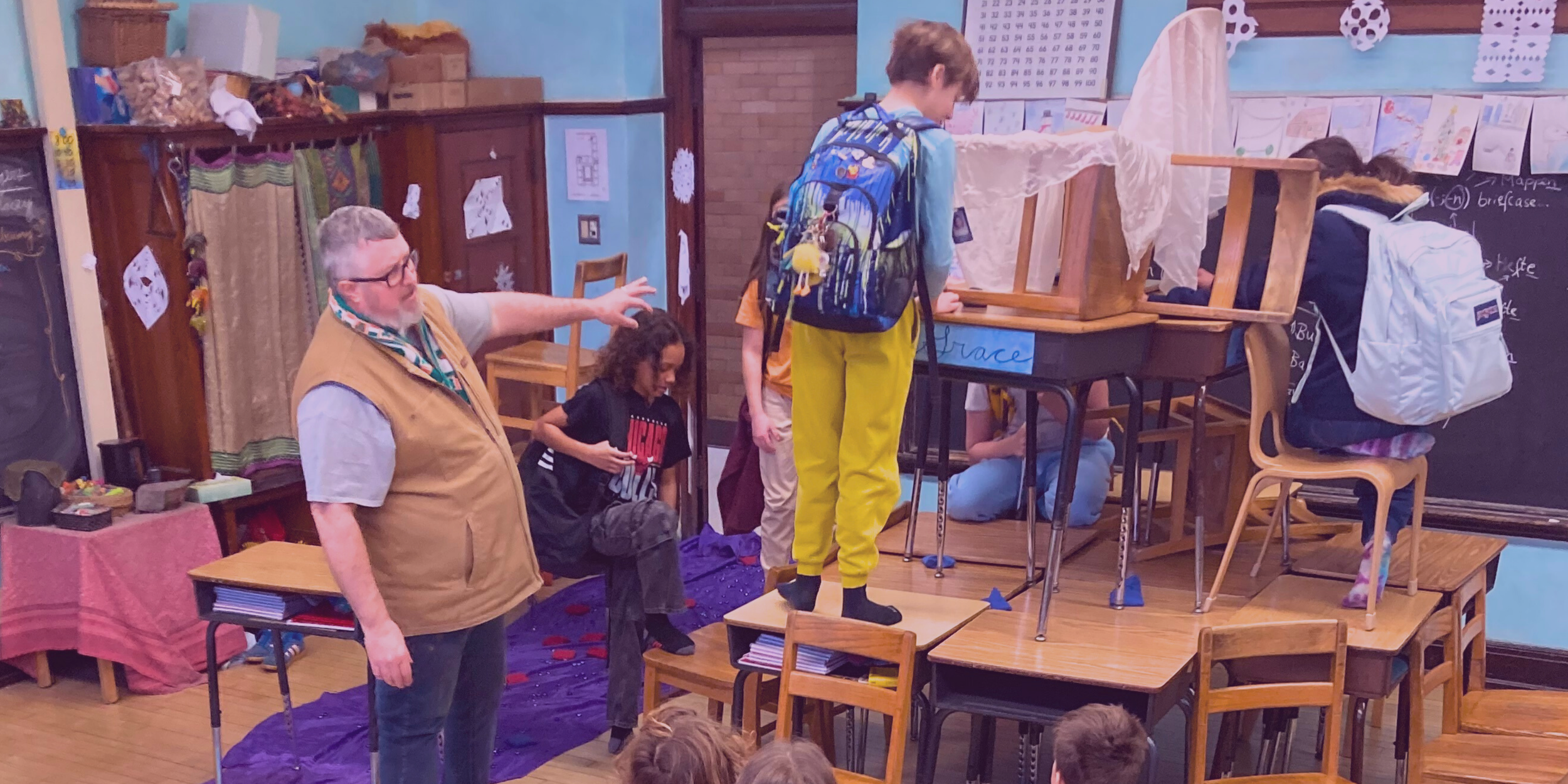
The classroom transformed into the Bitterroot Mountains of September 1805. Mr. Taylor and his class didn’t just study the hardest days of the Lewis and Clark Expedition — they moved through them, step by step, as the Corps once did.
They began with The Rocky Ascent, where desks, chairs, and silks rose into steep, uneven slopes. Students climbed carefully, imagining the narrow cliff edges and early snows that challenged the Corps.
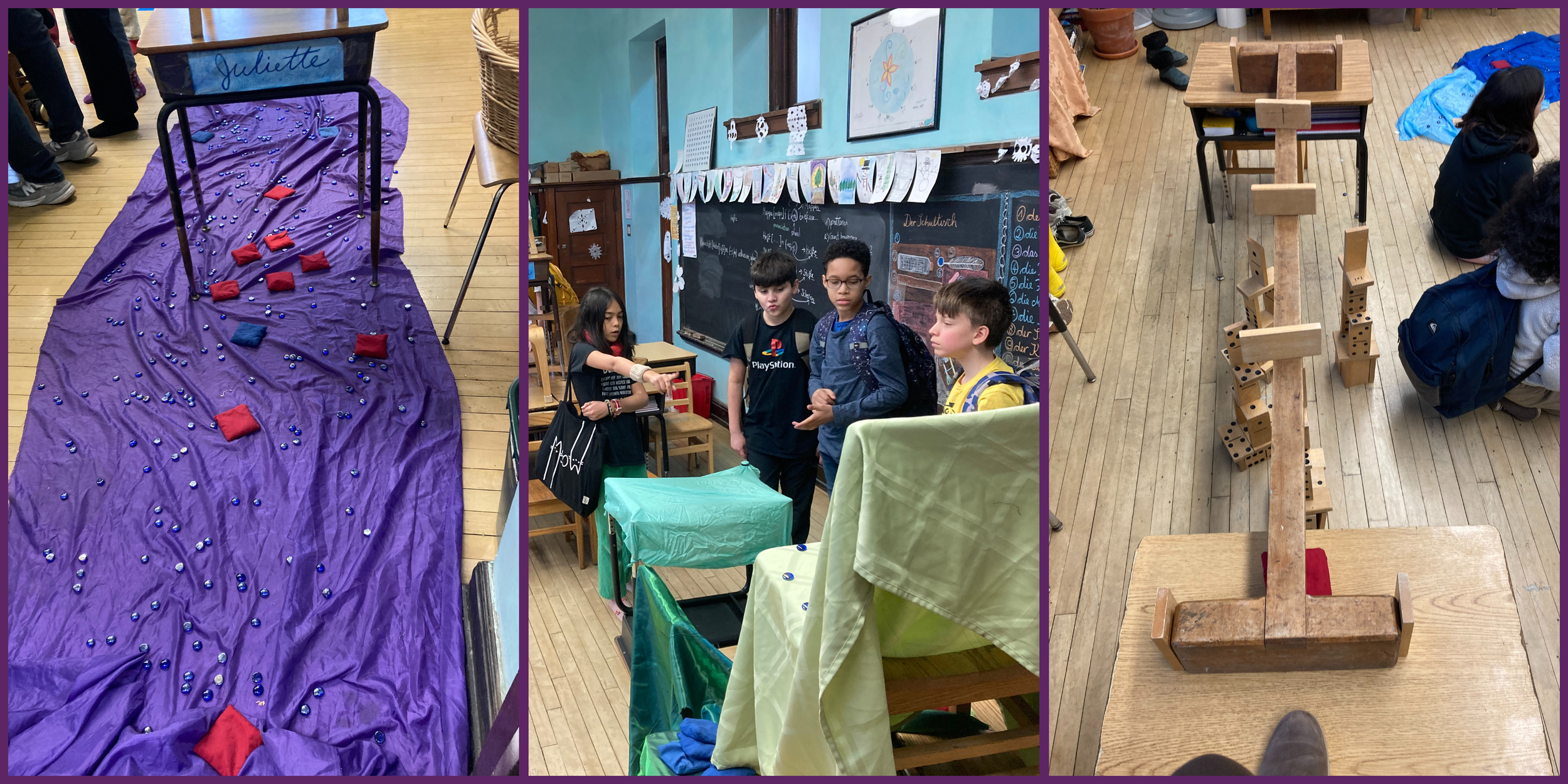
From there, they entered The Tangled Forest — a maze of chairs, silks, bean bags, dominoes, and Jenga pieces standing in for fallen trees. Students crawled under, climbed over, and wove through the chaos of a storm‑blown forest.
Next came The Snow Tunnel, a cold, dim passage of white silks and cardboard boxes. Students felt the closeness and chill of early September storms that trapped the Corps high in the mountains.
Only after emerging from the snow did they face The Hunger Balance — a narrow beam representing the weakness and unsteady steps of starving bodies. Students crossed slowly, imagining men who could barely walk after days without food.
At The Cold Creek Crossings, blue silks rippled across the floor. Using bean bags as stepping stones, students imagined placing each foot carefully on a cold, slippery rock, feeling the shock of icy water in their minds as they crossed from stone to stone.
Finally, exhausted and hungry, the class stumbled out of the mountains and onto The Prairie, just as the Corps did on September 22. Here they met the Nez Perce people — people who had every reason to fear these strangers but chose compassion instead.
Mr. Taylor shared the story of the elderly Nez Perce woman whose memory changed everything. Years earlier, she had been captured and taken far from home. White people (Soyapo – as she called them) had helped her return to her family. Remembering their kindness, she said to her people, “These are the ones who helped me. Do them no hurt.” Her words saved the expedition’s lives.
Through this immersive approach, the students develop deep empathy for the figures of the past. They feel the tension of the climb and the relief of the prairie, ensuring that the lesson of the Nez Perce woman’s compassion is one they carry long after the "mountains" return to being desks and chairs.