
grade school
Learn by doing.
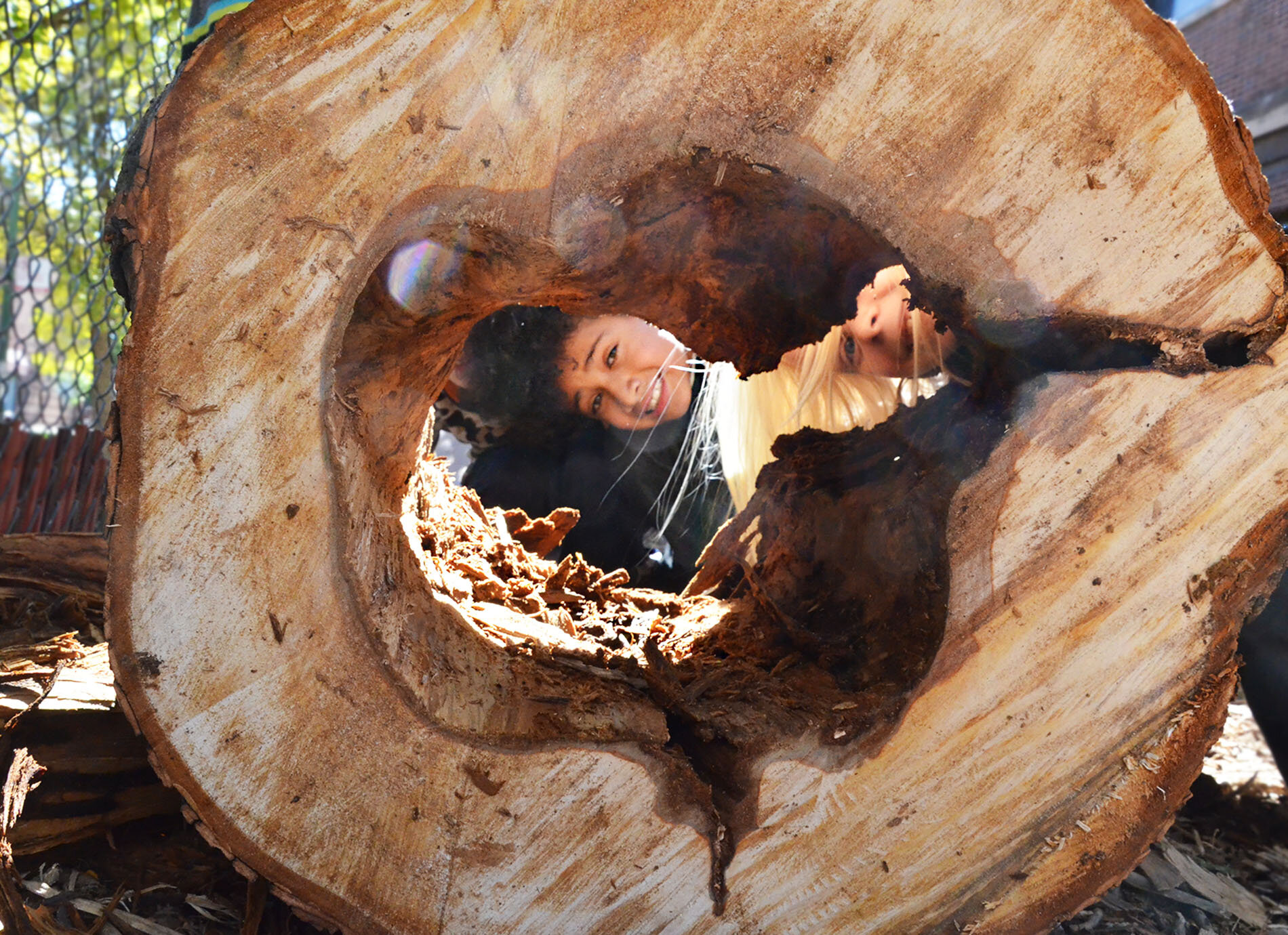
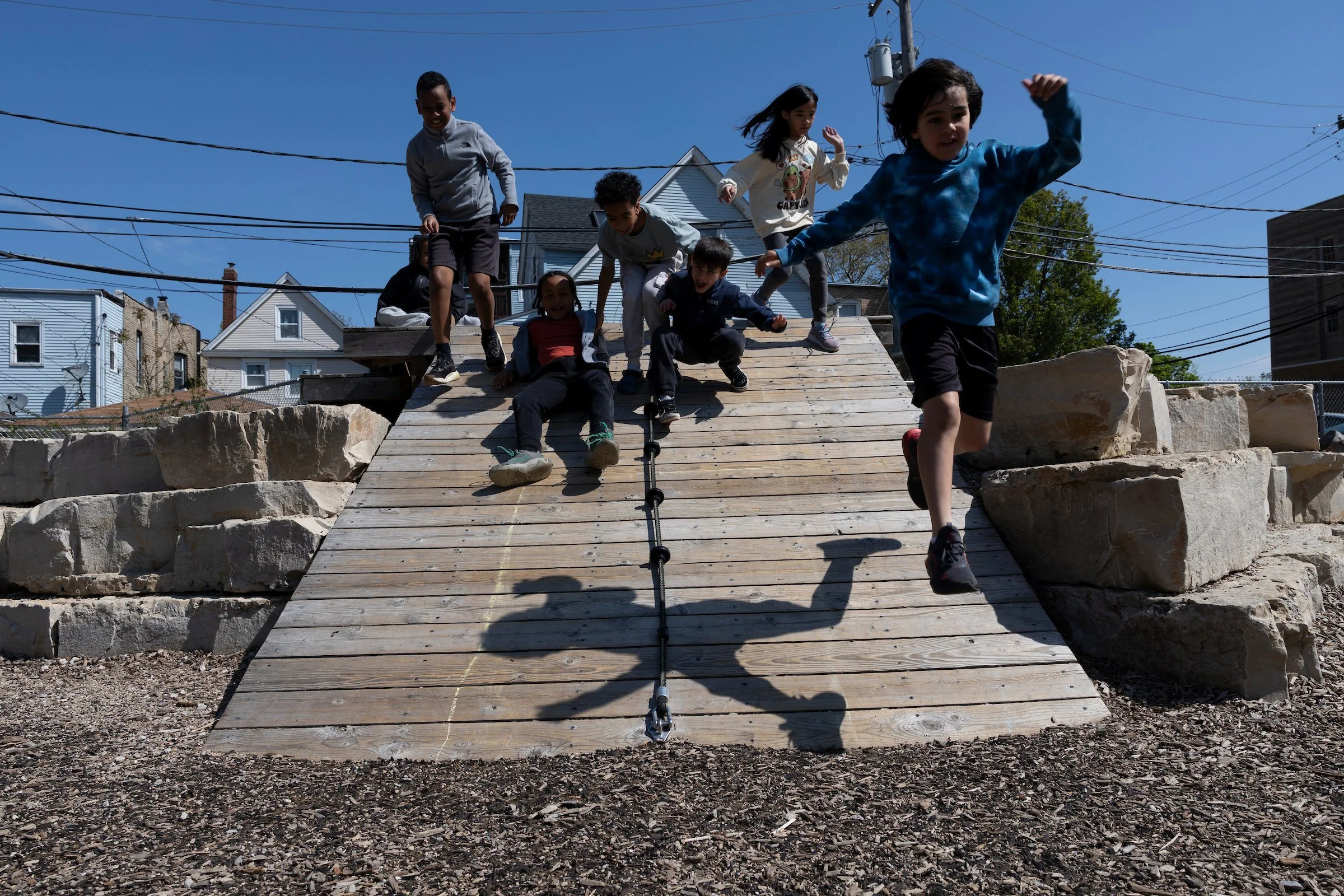
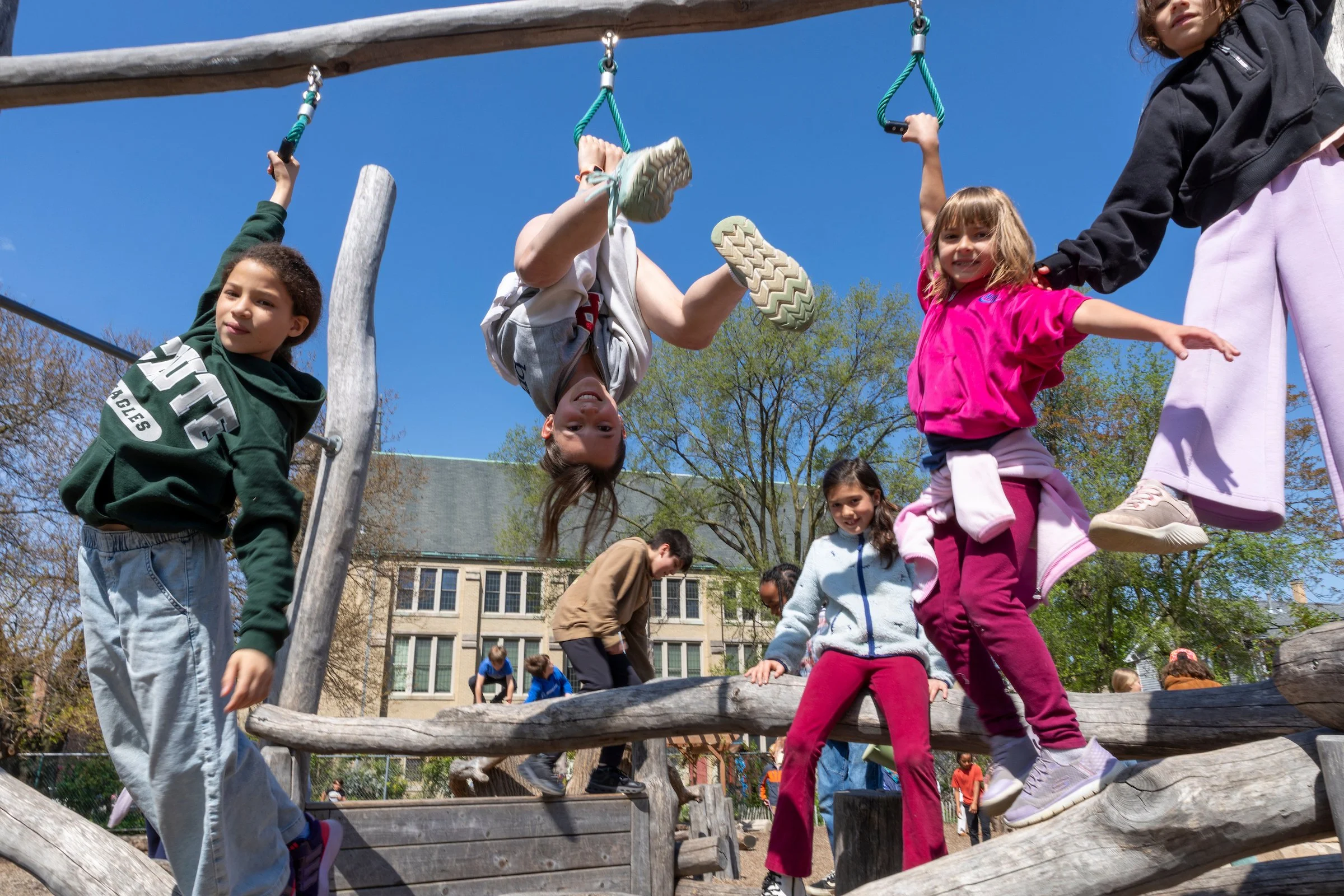
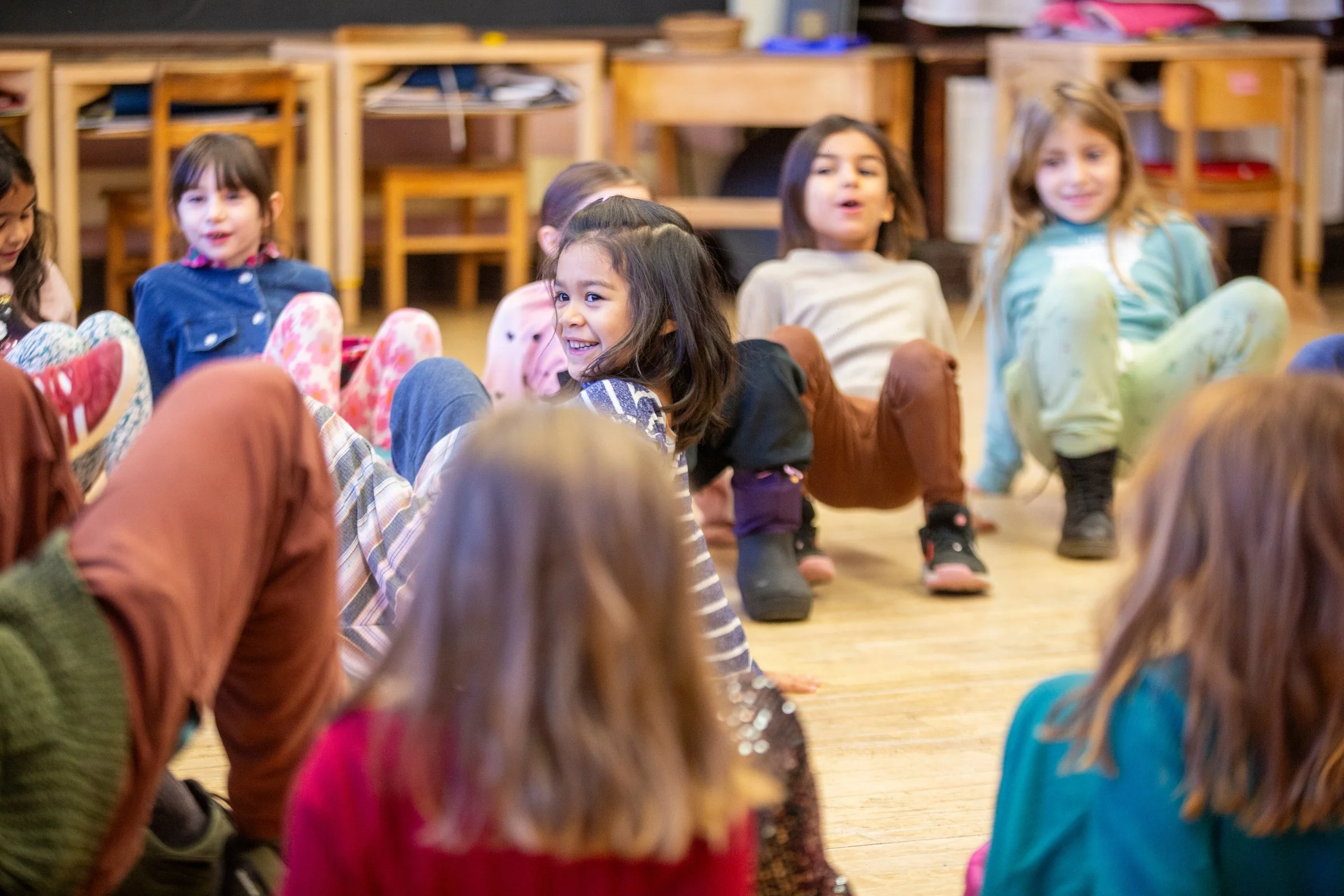
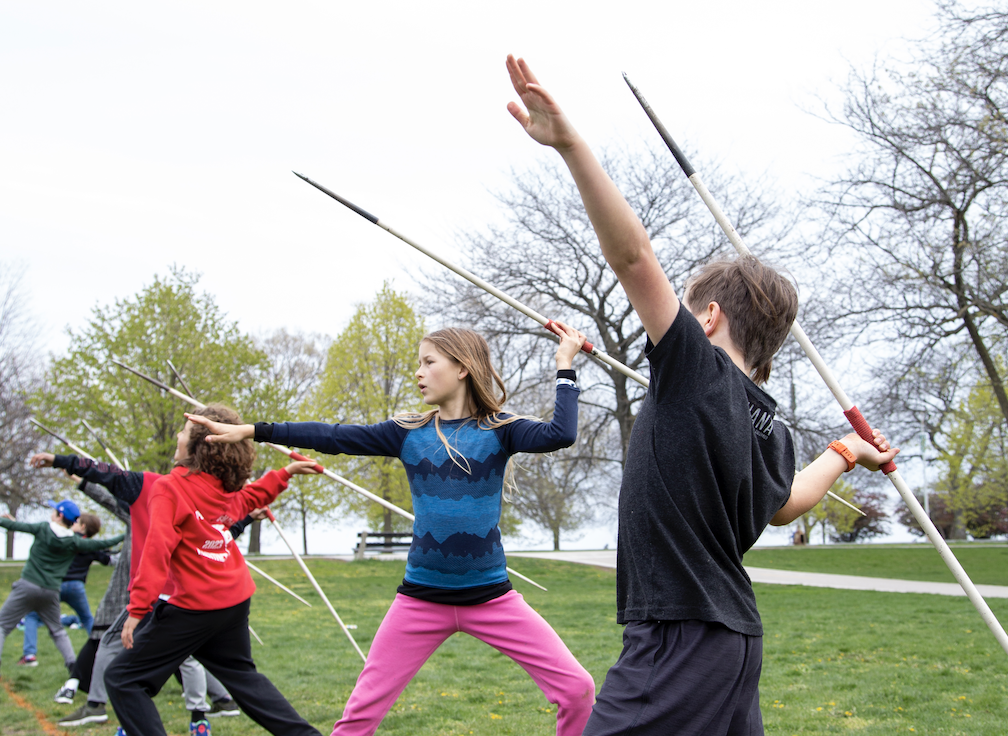
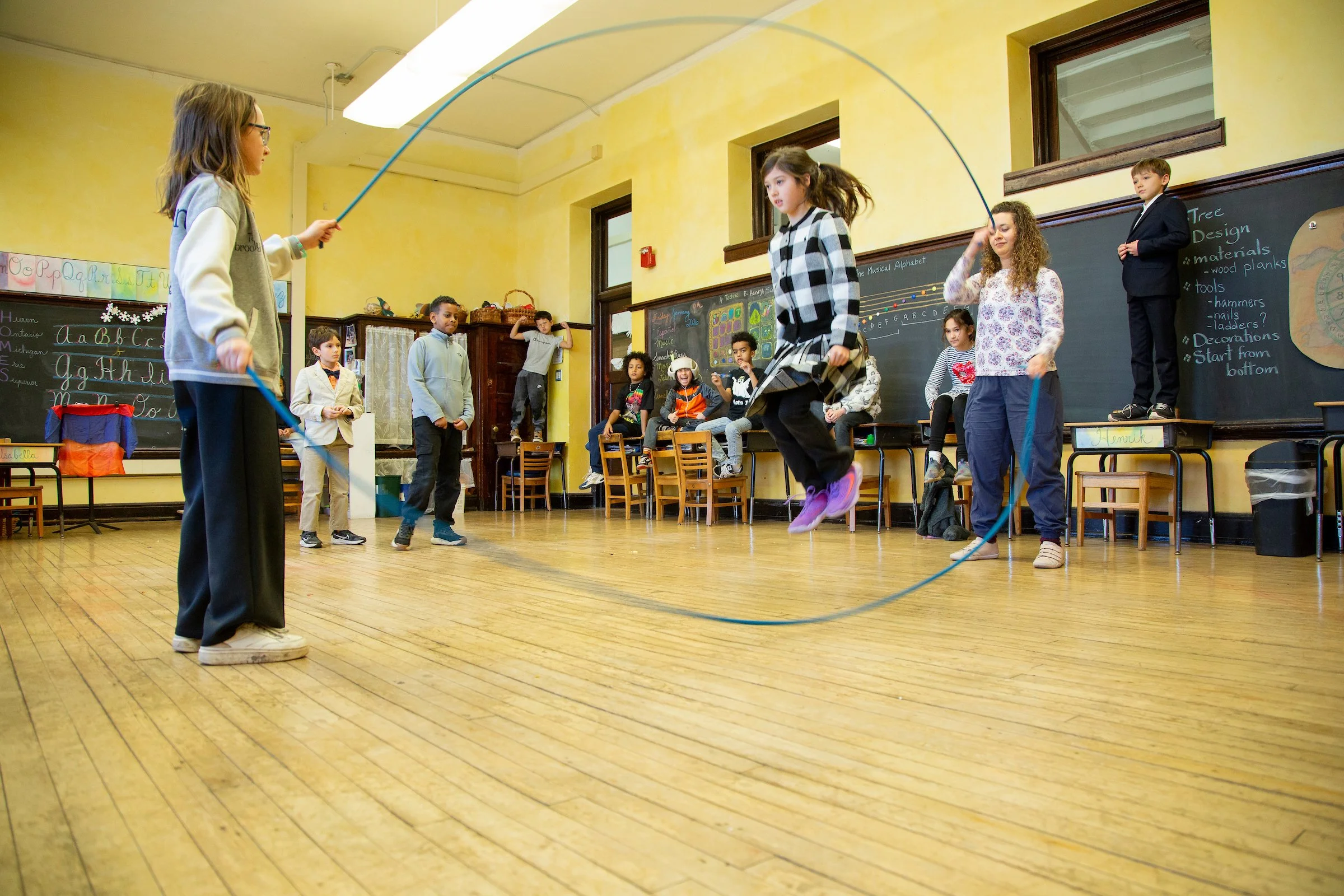
While great learning can be done at a desk, we believe that it can also be done on one’s feet. Movement, art, and music are integrated into all of our academic subjects, allowing students to learn in a variety of experiential ways that capture their creativity and nurture their curiosity. Whether jumping rope in the classroom, playing in a nearby park, or on a field trip throughout the city, we make sure our young students are stimulated physically as well as mentally.
Our robust Grade School curriculum exposes students to a number of different subjects, giving every student a chance to thrive.
1st Grade
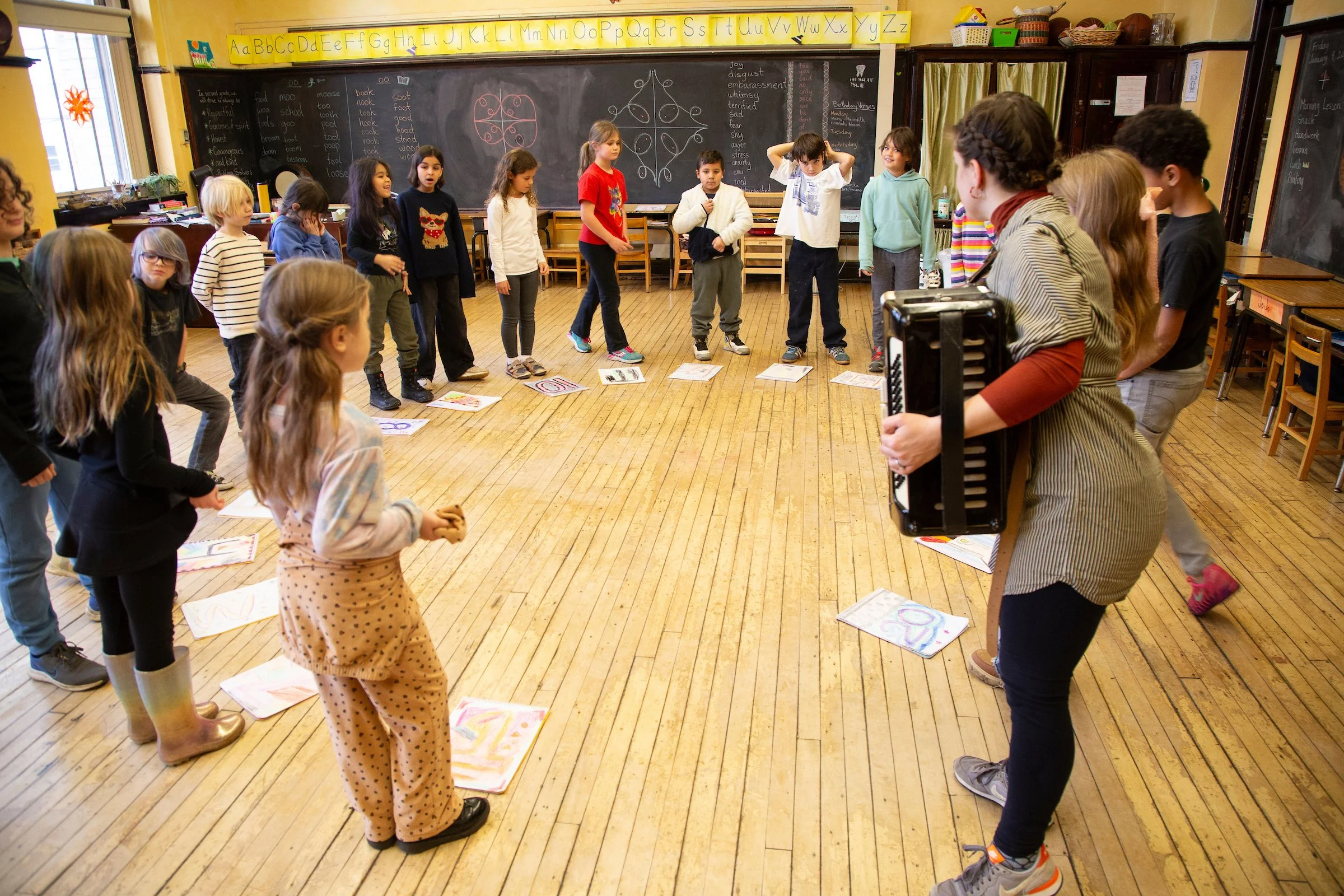
The 1st-grade curriculum blends structure with creativity through consistent routines, imaginative storytelling, and hands-on learning. Language arts begin with oral stories that lead to drawings and letter formation, helping students naturally connect sounds to symbols and build reading and writing skills. Math is introduced through stories and characters that embody the four operations, supported by manipulatives, mental math, and rhythmic movement. Students engage deeply through art, music, world languages, handwork, and eurythmy, while also enjoying daily outdoor play.
Just as vital is the emphasis on social development—students learn to work cooperatively, share responsibility, and build empathy through group activities and collaborative learning, developing the skills they need to thrive in a classroom community.
-
The four basic arithmetic operations are introduced simultaneously: division, multiplication, subtraction and addition. Students write numbers and number sentences. Through the use of manipulatives, students play with numbers and amount. As always, storytelling is a primary component of lessons.
-
Writing is taught by introducing the alphabet through pictures and stories. Students quickly move from reading and writing single letters, to writing words and short sentences. As with all subjects, these concepts are reinforced through daily activities like poetry recitation and active discussions.
-
Students experience alternating 6-week blocks of German and Spanish that provide immersive language exposure. Again, languages are taught through stories, music, and games that work toward vocabulary acquisition.
-
Celebration of seasonal festivals and holidays lead students through the cycle of the year. Classes spend an abundance of time outdoors, experiencing all weather and enjoying time in our park. Seasonal nature-based crafts are a regular activity.
-
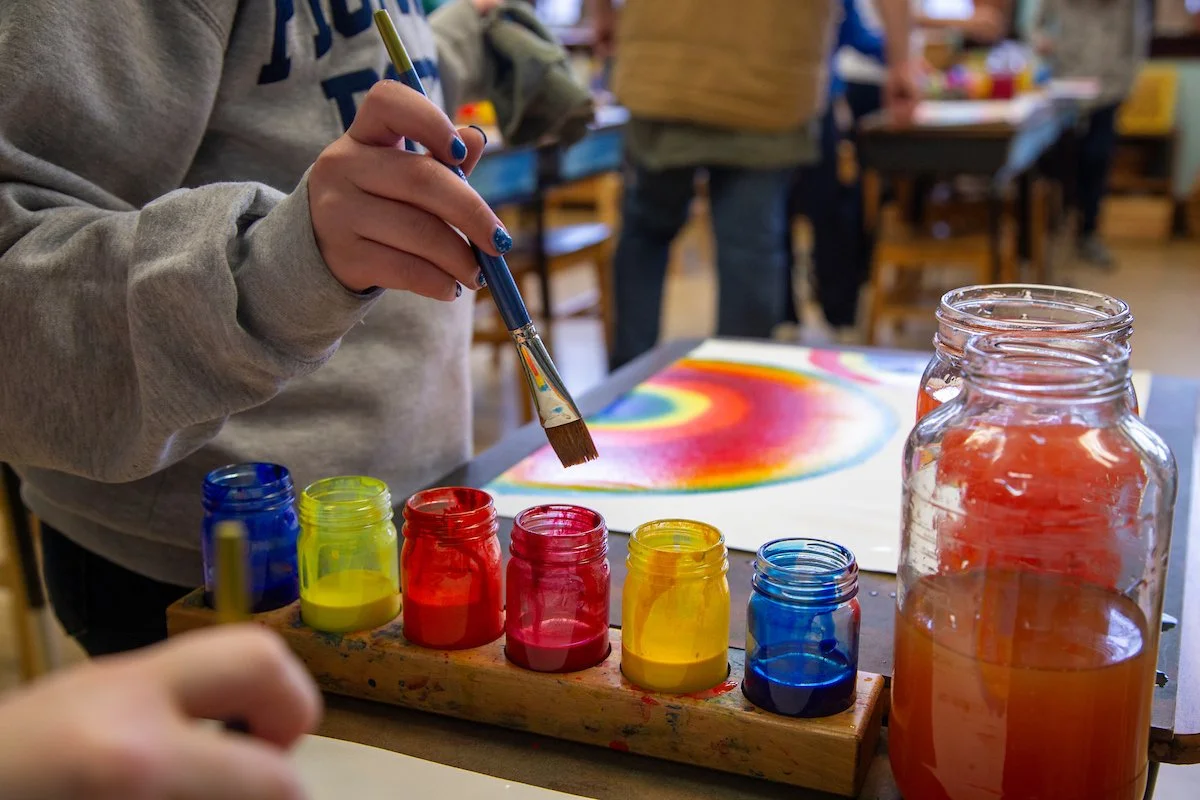
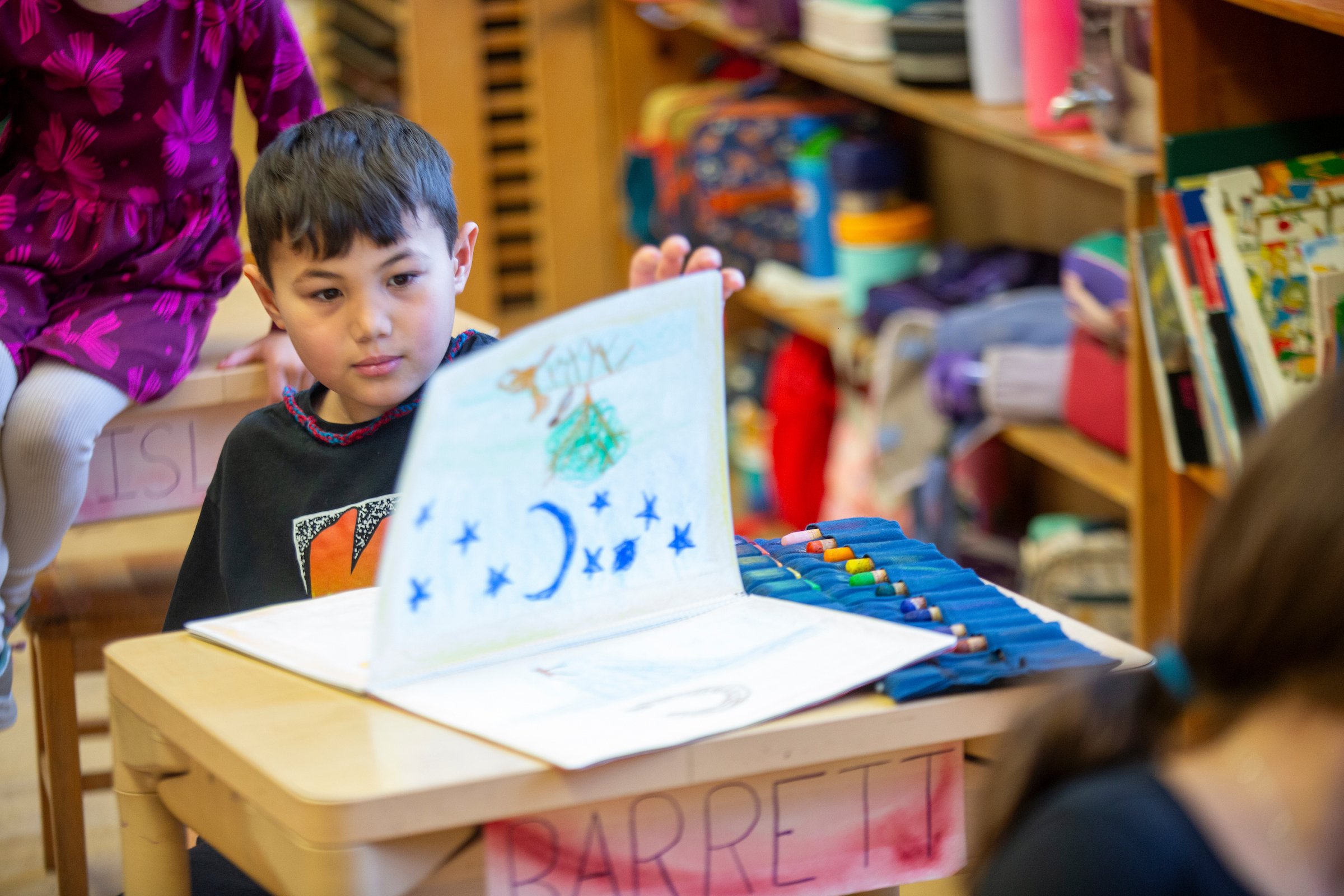
Students regularly draw, paint, and model. We use natural beeswax crayons, modeling beeswax, and natural pigment paint on cotton watercolor paper. We take care to use quality materials to amplify a student’s experience of color and form.
Classroom teachers and music specialists sing with the students and introduce simple flute playing.
-
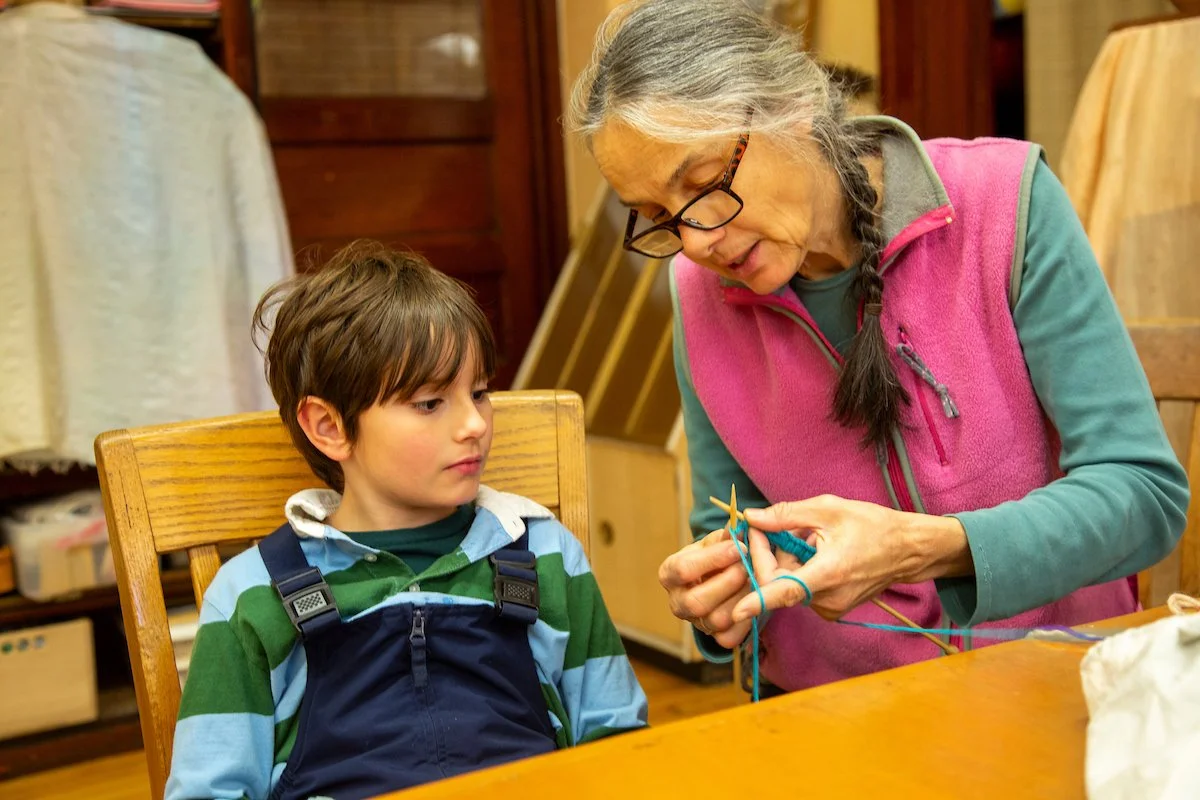
Knitting is not only fun, but is excellent for hand-eye coordination, analytical thinking, fine motor skills, focus, and counting. Students follow a long-term project from beginning to end and the final product is a hat.
2ND GRADE
Second grade is a time of growing awareness. As students begin to look beyond the imaginative world of early childhood, they become more conscious of themselves, others, and the world around them. Through stories of courageous individuals and clever animals, the curriculum explores contrasts in character, values, and consequences, meeting students at this important stage of development.
Academically, students build confidence and independence across the curriculum. Writing grows through continued oral storytelling, while reading expands through class readers, small-group work, and independent reading. In math, students work with numbers to 100 and beyond, developing skills in place value, multi-digit addition and subtraction, and the multiplication tables. Morning Lesson books bring academic learning together with artistic expression.
-
Continuation with the four arithmetic processes includes a strong focus on the memorization of multiplication tables 1-12. These are both visually represented, explored in movement and practiced with a goal of memorization. Place value is introduced and practiced in multi-digit problems employing carrying and borrowing.
-
Students continue to strengthen the sound/symbol relationship, learning about consonant blends, word families, and spelling structures. Simple sentence structure and punctuation are introduced, as is capitalization.
-
Immersive and alternating 6-week blocks of German and Spanish provide cultural exposure, vocabulary skills, practice pronouncing words. Language learning is done chiefly through stories, songs, games and movement.
-
Teachers tell nature stories to enhance the students’ experiences of natural and seasonal phenomena. Daily outdoor recesses and an end of year day trip provide direct, meaningful experience in nature.
-
Students regularly draw, paint and model. We use natural beeswax crayons, modeling beeswax and natural pigment paint on cotton watercolor paper. We take care to use quality materials to amplify a student’s experience of color and form.
The class teacher leads regular singing with the class. A music lesson each week led by a music specialist includes singing as well as working with a pentatonic flute.
-
The purl stitch is added to the knit stitch. Students continue to work on a long project, this time to knit a gnome with fun accessories. Not only is this project fun (and includes a much loved “gnome party” at the end of the year) but knitting and purling are excellent for hand-eye coordination, focus, understanding patterns, and these are skills that relate directly to math skills.
3rd GRADE
Third grade marks an important step toward independence, as students begin to ask, “Who am I in relation to others and to the world?” This developmental shift brings an awareness of self and a new capacity for thinking and judgment. The curriculum meets students here through stories from the Hebrew Bible, along with practical experiences in farming, building, and gardening that connect learning to the real world.
Academically, students deepen their reading and writing through grammar, longer writing, and weekly homework, while math expands into measurement of distance, time, and weight through hands-on projects. New experiences in Hebrew and Gym join continued lessons in Eurythmy, Handwork, and Music, giving students opportunities to build skills, confidence, and a stronger sense of independence.
-
Students work toward mastering multiplication tables and there is further practice with more difficult calculations. Measurement is covered: distance, size, weight, time. Students also learn about currency and counting money. Daily math practice sheets are introduced and for the first time students may have math sheets for homework.
-
The Hebrew Bible as well as creation stories from other traditions form the foundation of stories in third grade. Students practice independent and class reading. In writing grammar is emphasized including basic parts of speech; noun, verb, adjective, adverb, articles, conjunctions. For the first time, students may have spelling lists to take home and practice for a weekly spelling test.
-
Alternating 6-week immersive blocks of German and Spanish continue. Additionally, Hebrew lessons teach about Jewish culture, holidays and traditions. A small amount of Hebrew writing is done, and the class may celebrate the weekly Shabbat on Friday.
-
In the “Bounty of the Earth” blocks students learn about different climates on earth and how people adapt to living in different areas. Students learn about gardening, and specifically about growing food. These two subjects are combined as students learn about fibers, how to make clothing, and what type of clothes help people adapt to different environments.
-
In addition to the drawing, painting and modeling that students have done in earlier years, teachers may introduce plasticene for modeling. Students may also learn basics of cleaning and spinning fibers.
Music specialists work with the class to introduce musical note reading. While the students have been exposed to single and pentatonic flues, the third grade learns how to play the recorder.
-
Crochet is learned to strengthen the dominant hand. Students continue to work on geometric forms and three dimensional projects such as a pouch, hat, flute case or animal hand puppet.
4th grade
Fourth grade is a time of growing independence, curiosity, and self-confidence. As students develop a more analytical view of the world, they begin to see themselves as distinct individuals with the ability to make conscious choices. Norse mythology offers stories of courage, perseverance, and character, while studies of local geography, Native American cultures, animals, and the natural world invite students to explore their place within a larger community.
Academically, students take on more independent work through research, presentations, book reports, and longer writing. In math, they discover fractions through hands-on exploration, while science and geography connect learning to the world around them. Artistic and practical work deepens through form drawing, geometric needlepoint, and other hands-on projects, giving fourth graders opportunities to develop new skills and express their growing sense of possibility.
-
Fractions are introduced as are the related skills of finding common denominators and lowest common denominators. Students learn to expand and reduce fractions. Fractions are used in all four arithmetic operations. Long division is introduced and practiced. Students continue to use daily math practice sheets to increase the speed and accuracy of their calculations.
-
Fourth graders study Norse mythology, explore local history, and learn about animal behavior. They begin developing research skills through introductory report writing and practice reading independently with a focus on comprehension, inference, and decoding. The language arts curriculum also introduces grammar and parts of speech, paragraph development, and writing book reports.
-
Immersive German & Spanish studies continue and more writing and grammar are included in these lessons. Additionally, there are several lessons of Indigenous language and culture to complement and expand the class’s studies of local history and geography.
-
Fourth graders are introduced to Zoology. They learn about different animals and how they are uniquely adapted to their environment. The highlight of this work is the Human and Animal block where they each select an animal, research it and write a report. They also artistically represent their animal and make a presentation to the class about it.
-
Painting and modeling continue, and teachers may help the students execute complicated Celtic knot illustrations. Students learn how to represent land forms and features of a map artistically. There is an artistic component to their Animal reports, which may include drawing or modeling.
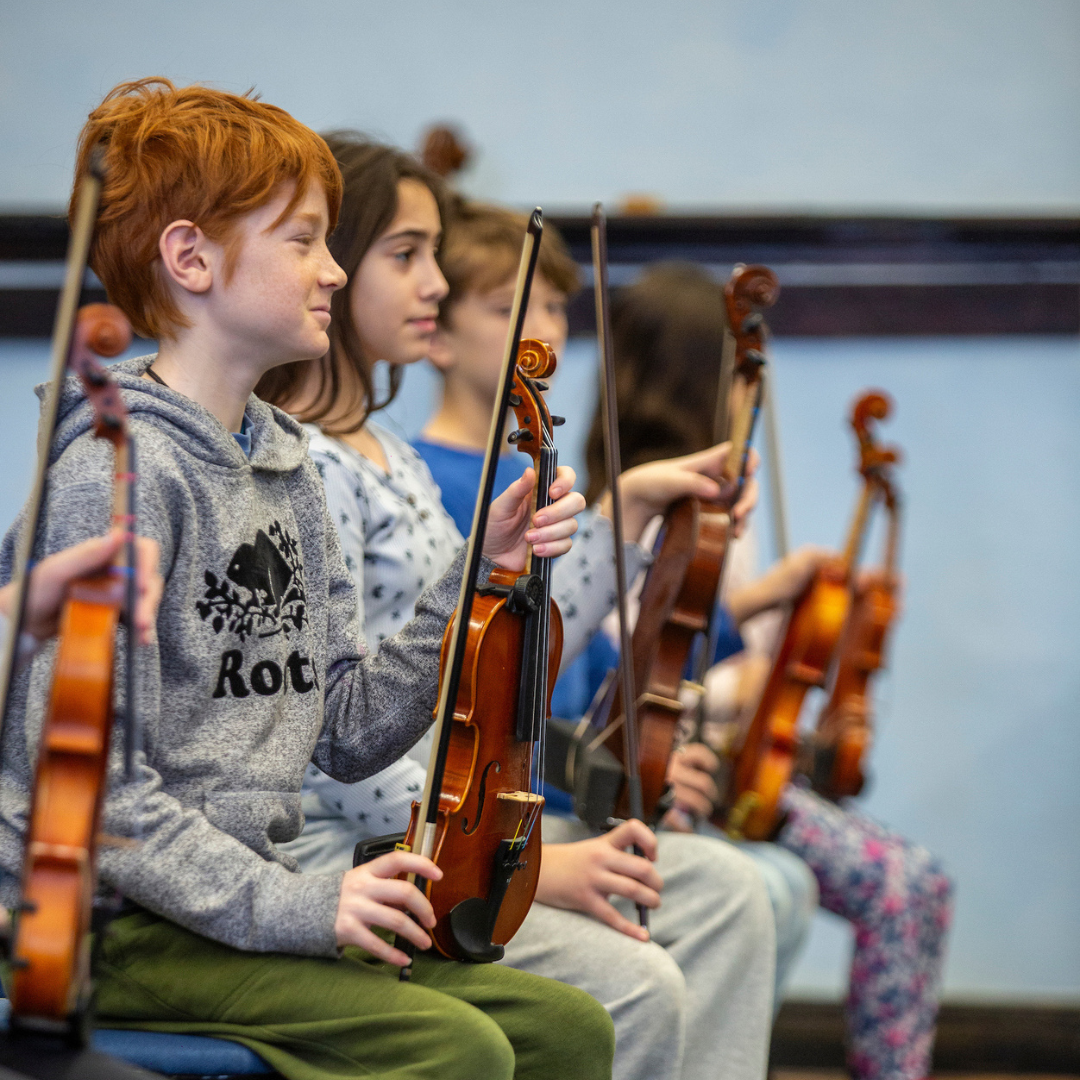
For the first time, students choose a stringed instrument— violin, viola, or cello—and begin learning through individual and group instruction. They develop careful listening, proper technique, and responsibility for caring for their instrument.
-
Sequences, patterns, symmetry and direction are practiced through cross-stitching. Students must carefully and accurately mirror geometric patterns in complementary colors and they each make a pencil case and possibly other projects.
-
In Geography students learn the four directions, how to draw and read maps, and how to navigate the school and local neighborhood. They learn about the geological beginnings of the Great Lakes region and the founding of the City of Chicago. The contributions of the Native Americans are celebrated and honored.
5TH Grade
Often called the “golden year,” fifth grade is a time of balance, confidence, and curiosity as students stand at the midpoint between childhood and adolescence. The curriculum broadens their understanding of the world through the mythologies of ancient cultures, offering diverse perspectives on human experience before transitioning to history through the story of Alexander the Great.
Academically, students deepen their work with fractions, decimals, and freehand geometry while exploring the natural world through botany and the cultures and geography of North America. Physical education takes on a new dimension through training in the five events of the Greek Pentathlon, culminating in a spring festival with other Waldorf schools. Across these experiences, students develop skill, curiosity, and a growing sense of their place in the world.
-
Students build their understanding of decimals and practice freehand geometry, developing both numerical skills and spatial reasoning.
-
Fifth graders will explore ancient mythology, engaging with stories that inspire their independent report writing. Independent and class-assigned reading deepen their comprehension and analytical skills.
-
German and Spanish lessons continue and students are increasingly challenged with vocabulary, grammar and conversational elements.
-
Students study botany, exploring the structure, growth, and life cycles of plants to deepen their understanding of the natural world.
-
Painting and drawing skills develop further as students explore more complex techniques and subjects. Teachers guide them in creating detailed illustrations that enhance their understanding of form and composition.
Throughour the grade school, class teachers continue to sing with their classes and music specialists work with the classes to provide a solid foundation in reading music and playing instruments. In 4th Grade, students chose a stringed instrument to learn and fifth graders decide whether to continue with that instrument in orchestra or switch to a woodwind instrument in band. Students perform in school assemblies and twice a year in evening concerts.
-
An important transformation happens when students tackle the challenge of knitting a pair of socks. They must use four knitting needles simultaneously to create socks, which is a very complex project requiring lots of counting, attention to symmetry and focus.
-
Students explore ancient civilizations such as India, Persia, Egypt, China, Mesopotamia, and Greece, learning about their histories and myths. They study the impact of figures like Alexander the Great and deepen their understanding of North American geography and Native American cultures through stories and cultural exploration.
Interested in learning more?