
our approach to technology
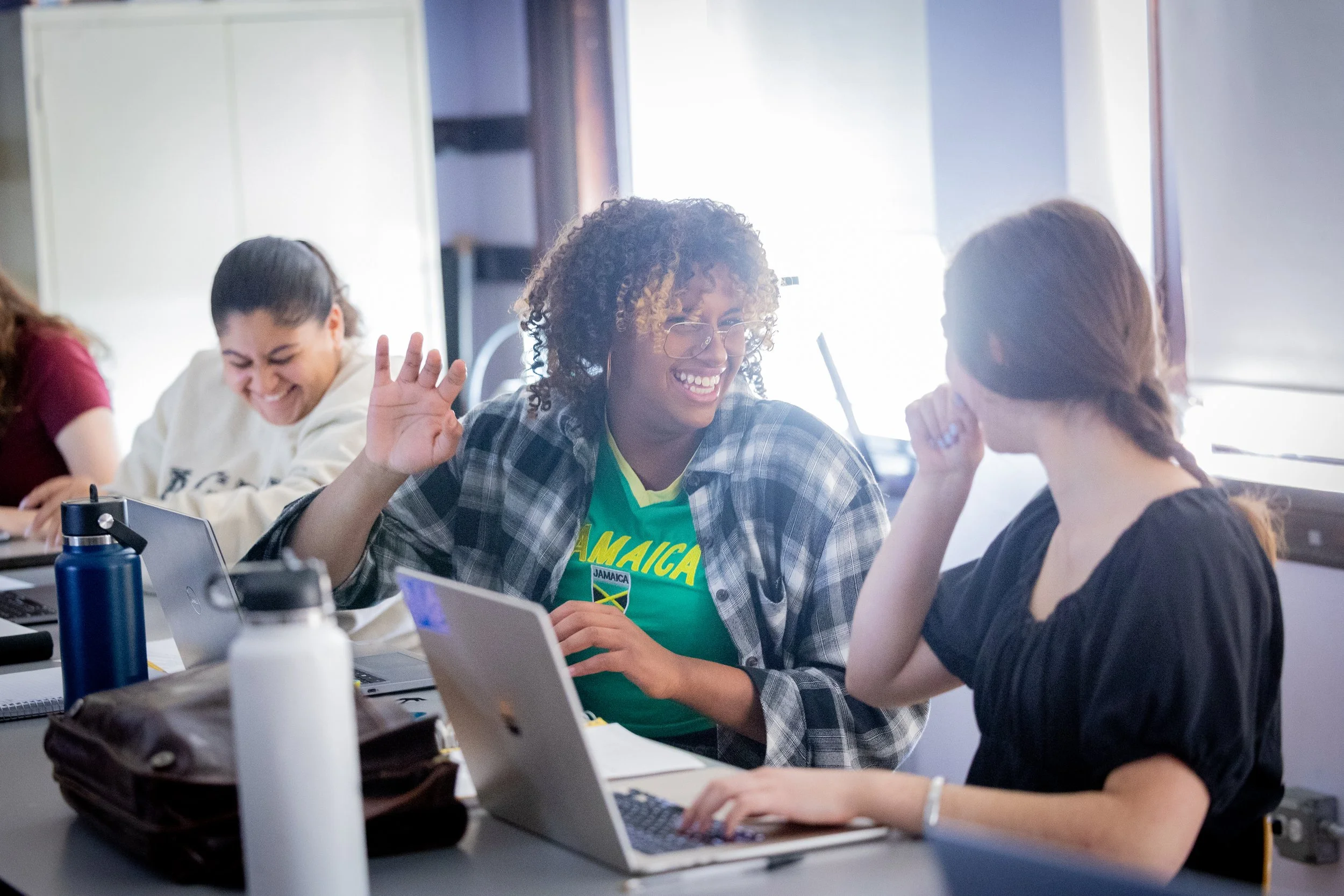
At Chicago Waldorf School, we take a thoughtful, developmentally aligned approach to technology. Rather than centering devices in the classroom from an early age, we prioritize human connection, hands-on learning, and creative exploration as the foundation for understanding.
more social, less media
Early Childhood & Grades 1-5
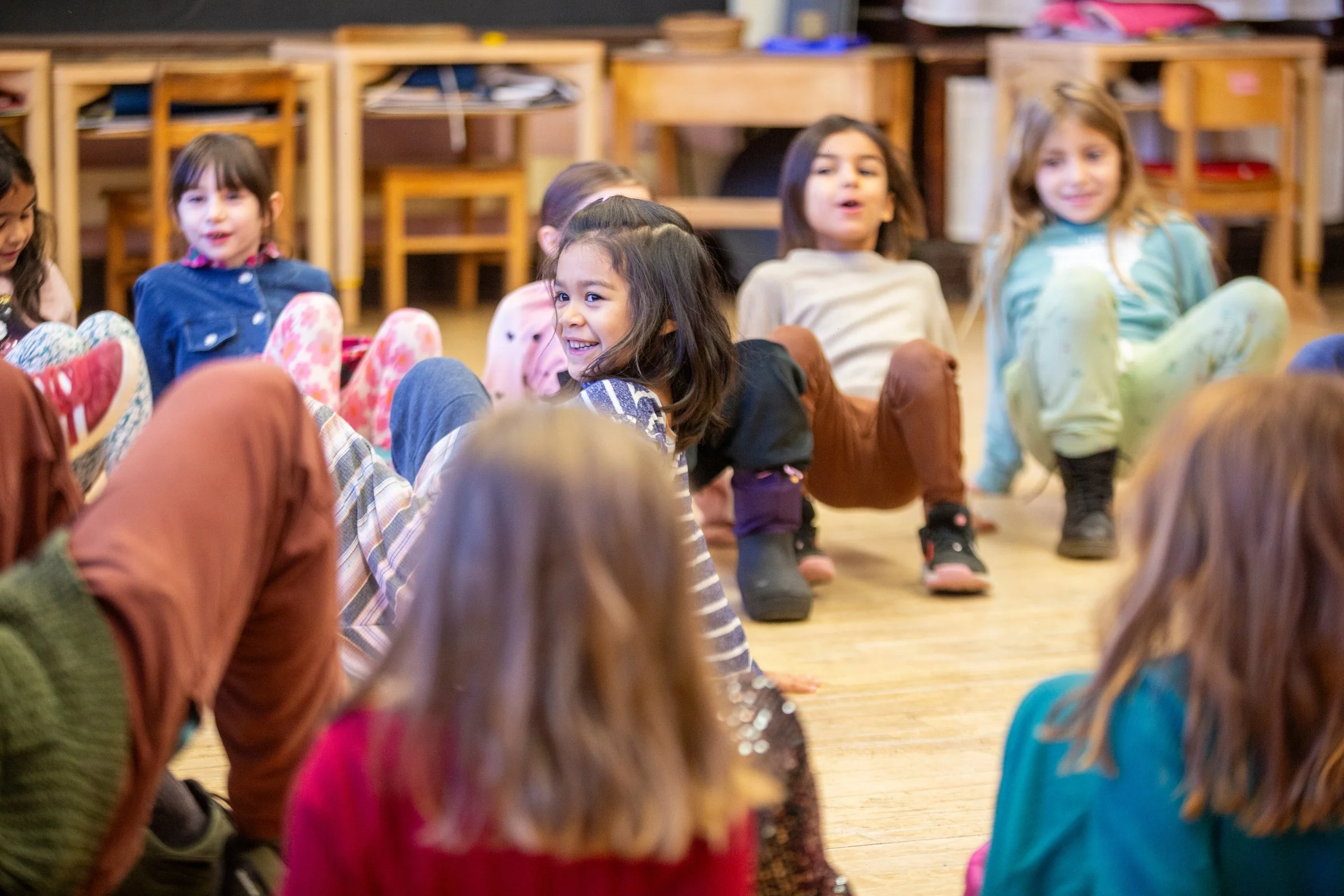
There are no computers or screens of any kind in our Early Childhood and Lower School classrooms (EC through Grade 5). During these years, the aim is for students to experience both the natural world and the social world directly through experience. Students are guided to express their learning competently, comprehensively, and artistically through writing, drawing, movement, and hands-on work.
This approach builds focus, creativity, and a strong capacity for independent thinking. It also nurtures collaboration and meaningful relationships with both their teachers and classmates.
Building Awareness
and Responsibility
Middle School
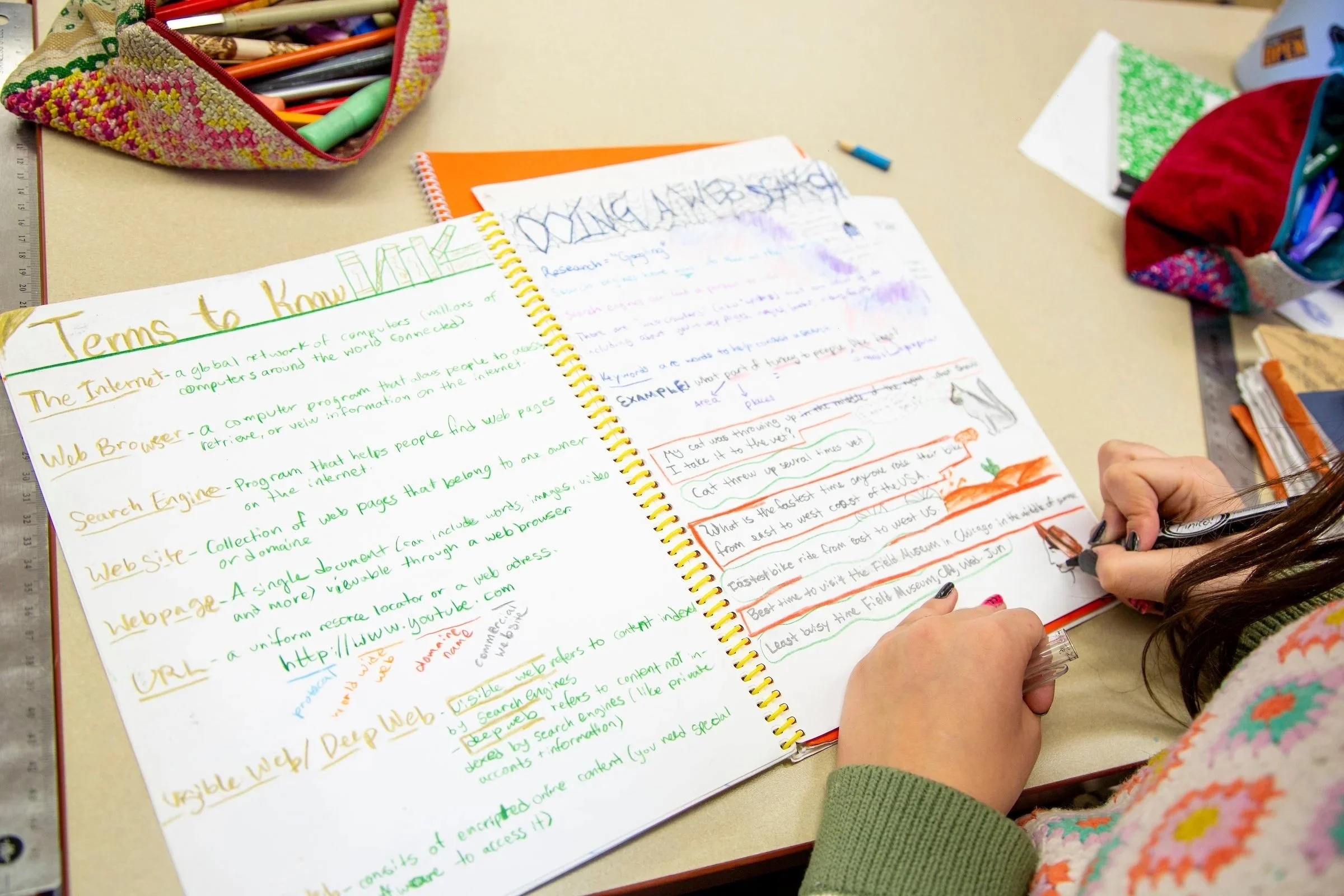
In middle school, students begin to explore the role of technology in their lives through a curriculum that includes Cyber Civics. Rather than focusing on device use, this work centers on digital citizenship, ethics, media literacy, and the social impact of technology.
Students develop critical thinking skills around online behavior, privacy, communication, and the responsibilities that come with participating in a digital world. This foundation helps them approach technology with awareness and intention before actively engaging with it as a learning tool.
Engaging with Technology Purposefully
High School
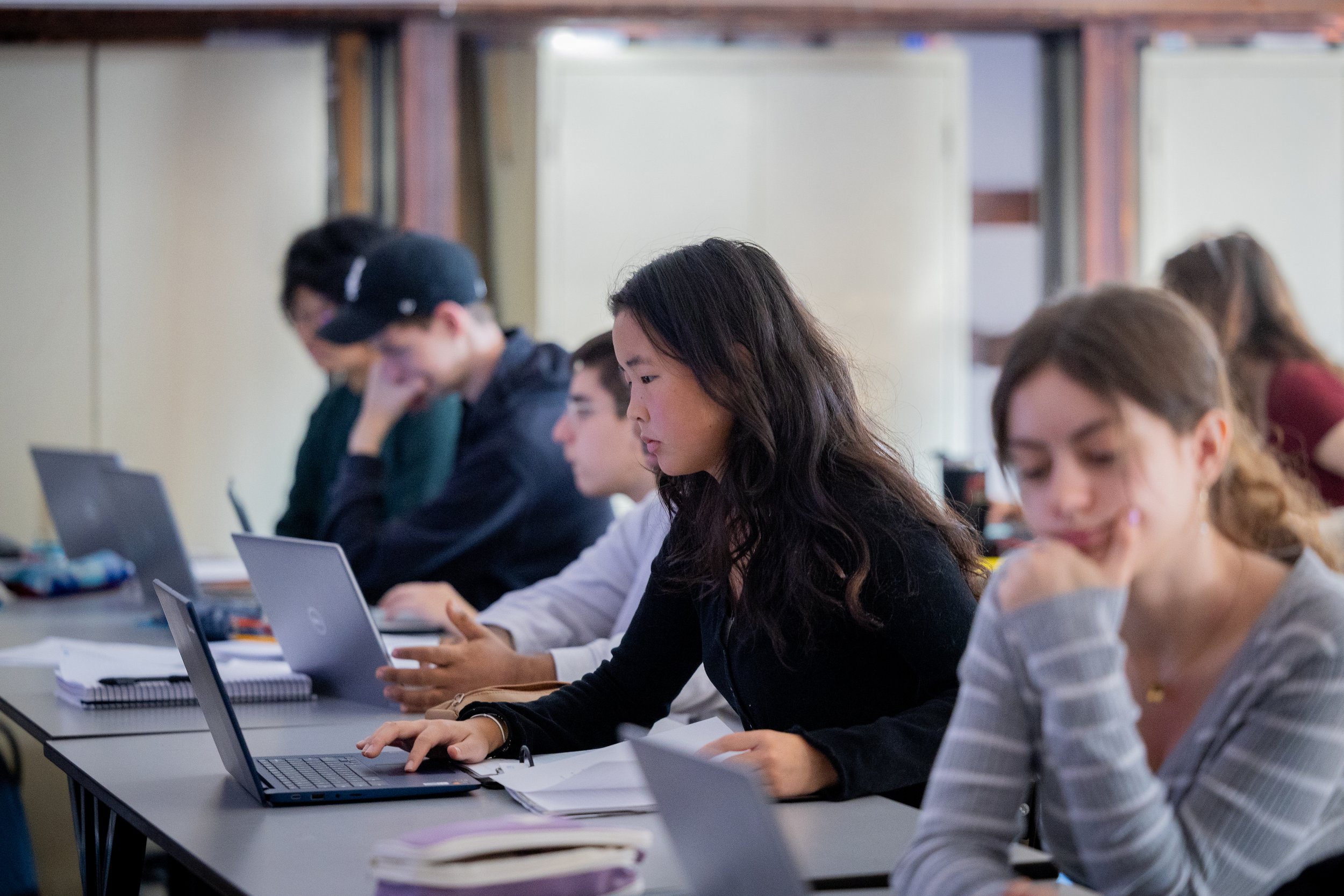
Once students have developed strong foundational skills, including critical thinking, research methods, and a sense of interpersonal responsibility, technology is introduced more directly in the high school years. Students use technology for research, writing, collaboration, and presentation, while also continuing to examine its broader impact on society and culture. Technology becomes one tool among many, integrated into the curriculum rather than replacing foundational learning experiences.
Students are expected to turn off their cell phones during the school day, allowing them to fully engage with their classmates, their teachers, and their education, whether in a science lab, an outdoor setting, or an arts classroom.
What Research on “slow tech” Shows

Teaching Without Screens
Just as students are not reliant on technology, our teachers are equally intentional in how they bring lessons to life. In the Waldorf classroom setting, teachers do not depend on screens, slide decks, or pre-packaged curriculum to deliver lessons. Instead, lessons are prepared and presented through storytelling, discussion, hands-on opportunities, and chalkboard work.
Teachers are also deeply engaged with the broader world of knowledge. They draw from scholarly research, historical documents, and trusted resources, including those found online, to inform their teaching. Technology supports their preparation, but it does not replace the human connection at the center of the classroom.