
Alumni Spotlight: Alice Packard
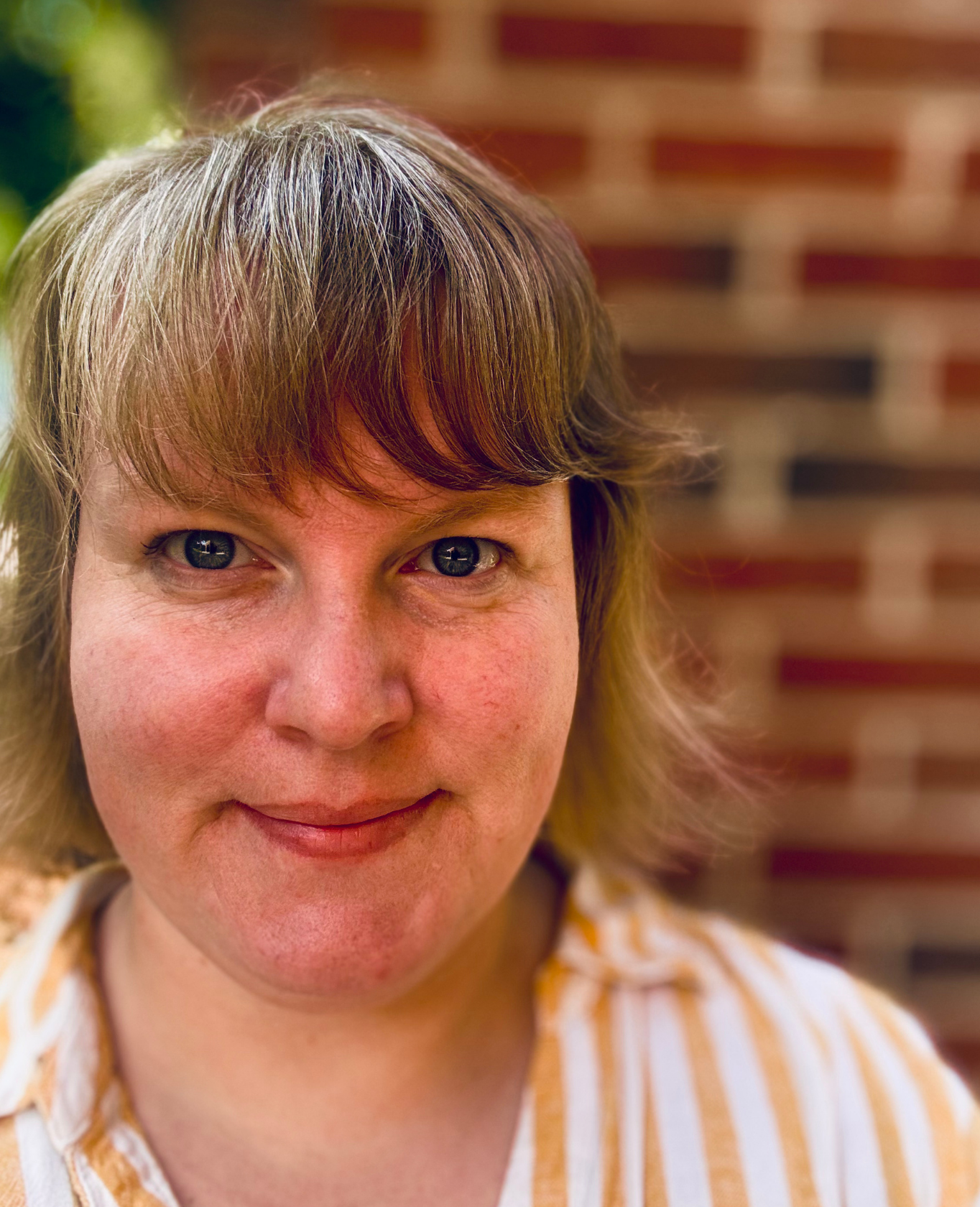
Alice Packard began her education at a Waldorf school in kindergarten back in the '90s and stayed all the way through high school at Chicago Waldorf School. Today she is the Senior Creative Producer on Disney Lorcana, one of the biggest trading card games in the world, after an exciting career path that ran through Vermont, North Carolina, Brad Pitt's production company, and the Chicago and Los Angeles film scene.
We talked with her about how a Waldorf education shaped a creative life that almost never went the way she planned, and why she thinks that is exactly the point.
Tell us about your history with Chicago Waldorf School.
My parents enrolled me in Great Oaks for kindergarten, way back in the day, in the '90s. My sister's older than me and she did not go to a Waldorf kindergarten, but she did start in first grade, back when we were on Diversey. And then I went to first grade and I was in Mr. Booker's class, Alan Booker, who stayed with us until sixth grade and then Barbara Huckabay took over for two years. Then I went to the high school. So I was part of that whole transition of moving from Diversey to Loyola.
My mom always talks about what she liked about Waldorf, and philosophically it was like they looked at children more from the inside out rather than outside in. There's not a sense of kids having to remember things or retain information as much as allow them to find their way in the world in some ways. And that really has always been how I function, I think, in life.
You actually tried leaving for public school at one point. What happened?
I tried to go to public school for, like, six weeks in seventh grade when Mr. Booker left. I sort of was like, "This is my chance." I was the weird kid in all my social groups not associated with Waldorf, like choir and summer camp and stuff, because I didn't go to public school and I really wanted to go. So I tried going to Nichols in Evanston, and within six weeks I was already failing, and it did not make sense. It wasn't that I wasn't trying or I wasn't engaged or I didn't care, I just was overwhelmed. It was too many kids. It was moving too fast. Having to run from period to period was jarring. So, I quickly came back to Waldorf, and joined back into the seventh grade. And from there on out, I never even considered another high school.
Do you have a favorite memory of how Waldorf education was taught?
I always found it really engaging and helpful that it was a hands-on sort of approach. I remember in high school, one of the classes was a mechanical engineering class in senior year, and the teacher just brought in a motorcycle that he bought off Craigslist. It didn't work and he was like, "Okay, let's make it work." That was the class. I think the block was a six-week block or something, and it was just, like, what's not working, why is it not working, and let's actually apply all of these things that we're learning. We did get it working eventually.
What was Marlboro College like?
I went to Marlboro for four years. It was a tiny little community in the southern mountains of Vermont. It was founded during World War II in order to provide a college education experience for veterans primarily. The student body when I was there, I think the highest it was, like, 200 or so people, and the lowest was, like, 140. It was very community-oriented, very Waldorf-coded. A lot of Waldorf alums went there. For me it felt like home immediately... it wasn't a cultural, like, education shift.
It was very focused on writing, and by writing, it was like communication. The only academic requirement that school had was a clear writing requirement. What they were trying to do, I think, was to make sure that you knew how to frame an argument, how to be clear in your communication of what you intend to say, and have the person that you're talking to understand clearly what you're saying. It was like, "This is necessary for life. You're going to have to write emails. You're going to have to communicate." So it's really interesting in this day and age with AI how everybody is thinking that they can sort of outsource that, and I'm like, "That is not how it works." ... I graduated with a liberal arts degree with a focus in American studies and photography, with sort of a concentration within that of screenwriting.
Ironically, Marlboro transitioned into an institute within Emerson College and no longer exists as a college in Vermont.
How did your film and television career take shape?
I didn't want to move to LA or New York right away, because by then I had actually learned my lesson and realized that I'm not a good little fish in a big pond person until I have my footing. So, I moved to Wilmington, North Carolina, because that had a little nugget of a film community that was thriving. But, right before I moved there, the incredible tax credit in North Carolina for film and television production was dismantled. So, the productions that already existed there stayed, but no new productions were coming into town. New opportunities were not as abundant.
I worked the odd job for a year and then I went to grad school at Columbia College. I got my MFA in Cinema Arts + Science, Creative Producing. That program ended in Los Angeles, where I started strong and interned for Plan B Entertainment, which is Brad Pitt's company. It was right after they had won the Oscar for 12 Years a Slave. I read basically a script an hour, and I had to write coverage on those scripts. It was like a boot camp of story and narrative. I still to this day can watch a movie and be like, "This has zero rising action." Or I can predict the next scene and what its purpose is ... That training propelled me into a few years of development work. I started as an assistant at a company called Mili Pictures, and moved up to Director of Development before returning to Chicago.
When I returned to Chicago, I PA'd for this independent film, and a friend met on that film recommended me to be the art department coordinator for Shameless when they came here to shoot. I did that for a couple of seasons, and I ended up being an art department coordinator on multiple shows and some films. The Lovecraft Country pilot was one I'm particularly proud of. I was in Pilsen the other day and our signage is still up in some store fronts, 8 years later.
Then came a big pivot. How did you end up on Disney Lorcana?
I am a writer and storyteller and had moved to Los Angeles to pursue my writing career and it was going incredibly well. I was getting calls and having a lot of general meetings with production companies. But then March 2020 hit. everything shut down. All the calls and emails stopped. So, to pay the bills, I did odd jobs.
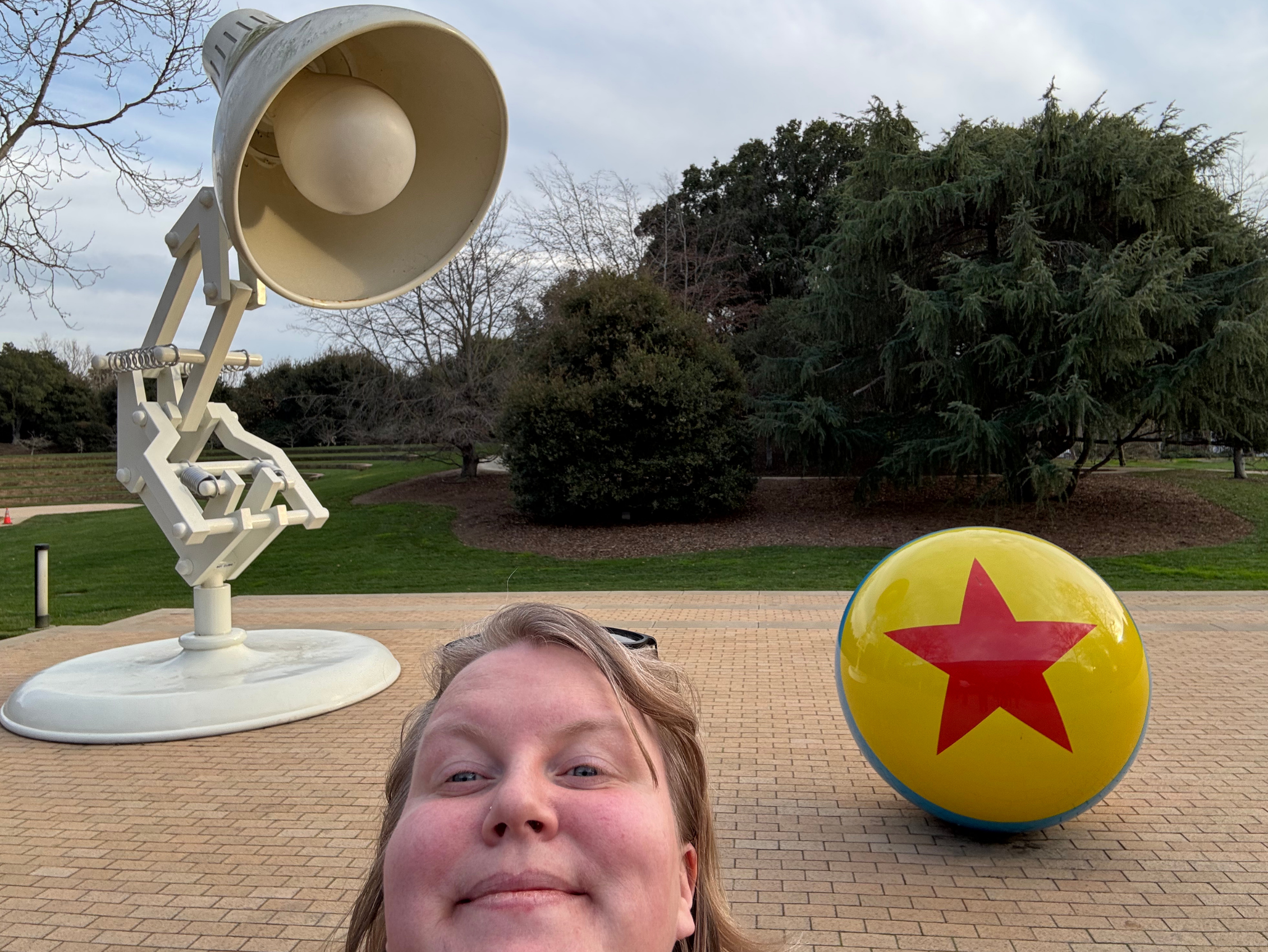
My own hobby is, I really enjoy board games. And I randomly found a job listing on a Facebook group for a creative coordinator for Ravensburger. I grew up playing Enchanted Forest and Labyrinth and other Ravensburger games. When I got interviewed, they were like, "We have a top-secret project that we're doing, and if this goes well and you end up coming on board, we'll let you know what it is." Once I got hired and came on board, they told me that they were developing Disney Lorcana, which is a trading card game. I came on board when they were still working on set one.
I went from creative coordinator to project manager to creative producer, and now I'm senior creative producer. It's almost four years now and I did rise in the ranks quickly. I enjoy my job, i get to flex my creative muscles, work on story, and problem solve. All things in my wheelhouse. My job basically boils down to that I work with our Design, Narrative and Creative team as well as Disney to find a way to actually create the game. I'm the negotiator and mediator. I'm the person that brings two parties together to figure out, okay, we need to do this, how do we do it?
How much of your work today comes feels inspired by your Waldorf education?
I do think all of my experience at Waldorf of storytelling and empathy are what allow me to be good at my job. I need to understand where everyone is coming from, what matters to them, and then find a way forward. So, in this day and age when people are talking about AI and wanting AI to take away the busy work of emailing or talking to people or notifying or structuring, I'm like, that's “the work.” I don't understand how we remove those tasks from “the work.” Efficiency is often used as a reasoning for things, but it's honestly just code for how can we do it faster for less money. It doesn't actually mean how we can do it better. I think art cannot be more efficient. We don't need it to be more efficient. Storytelling doesn't need to be more efficient.
What advice would you give current students heading out into the world?
Take your time. There's no rush. It feels like there's a rush right now because the world is on fire and people feel like we got to do it before it's all gone. But I think that being open to things not going exactly how you pictured it is probably the best overarching advice I would give. Because if you are so rigid and so determined to have something happen in the way that you want it to happen, it's probably not going to happen. When a door closes, multiple windows open. Get used to climbing through windows.
I still have ambition and hope, and I'm working on scripts and independent projects that I am going to be making and telling my own stories for the world. Will it be a TV show on HBO, like was my dream from middle school on? Maybe. But it also might not, and it might not even be a TV show. It might be a graphic novel. It might be a movie. It might be a book. I don't know. But it will be something.
Also, failure is not real. Or at least its not what we think it is. I don't think people fail. I think they hit road bumps. Unless they're just not putting in the effort, then I would say that's a failure. But if they do everything they can and something doesn't work out, I don't think that's a failure. I think that's just, "Hey, you went down a path. The path stopped." That means you either turn back and go a different way, or you walk off into the woods and find a different way.
Any last thoughts?
Waldorf means a lot to me. I'm glad that it is thriving. Andrea Schaefer often tells the story about how in kindergarten I used to walk around in the yard, and there was this big hill at Great Oaks that swooped into where the kindergarten windows are, and she said that I used to always walk along the side, singing and talking to myself, whereas everybody else was walking around playing and talking to each other. And I was just in my own world telling my own stories. It wasn't that I was uncomfortable or felt like I couldn't socialize. I was just not concerned with the others.
My sister is a Waldorf teacher in Cincinnati. She's Ms. Fay at Cincinnati Waldorf School. And my niece and nephew go to Waldorf school. My niece just went to Pentathlon, which is crazy. I still have my Pentathlon shirt. It has a lot of holes in it, but I wear it as a pajama shirt sometimes. I'm happy to have had the opportunity and the privilege of going to Waldorf.